
Stair Lift Alternatives for an Existing Home
Compare the stair options families actually use in an existing home, and decide which one fits the person, the caregiver and your stairs.

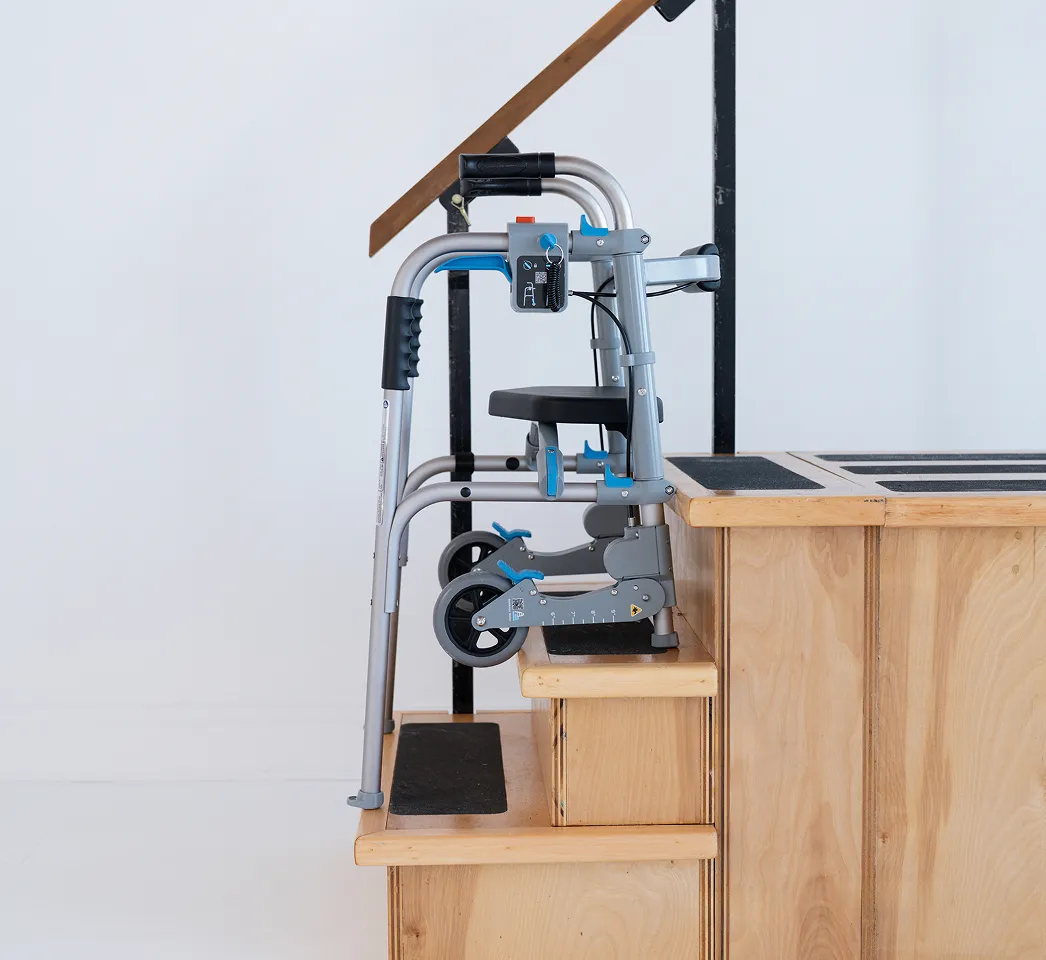
The main stair lift alternatives for an existing home are a portable stair climber, a stair-assist cane, an extra handrail, a StairAssist Walker used with a trained caregiver, or moving daily life to the first floor. Which one fits depends on whether the person can sit and transfer or stand and step with help, and on the stairs. A physical or occupational therapist can help you decide.
The short version
- Stair lifts cost $2,000 to $8,000, need installation and cover one staircase.
- Portable stair climbers need two trained operators and suit people who can't stand.
- Canes and extra handrails help people who can climb with a little support.
- StairAssist Walker (SAW) needs no install and suits people who can stand and step with help, always with a SAW Certified™ Caregiver, a gait belt and a handrail.
A stair lift covers one staircase
If you're the one helping your dad up the stairs, a stairlift is usually the first thing you look at. For a lot of families, it's the right call.
Stairlifts typically cost $2,000 to $8,000 and need an environmental assessment, professional installation, and some homes are not always suitable. A stairlift is installed on one staircase.
Your dad's week has more than one.
The front steps. The porch. Your house at Thanksgiving.
So ask which option works on the stairs in his whole life, not just the ones at home.
Stair lift alternatives compared
| Option | Best for | Install | Works on | Caregiver | Price | Not for |
|---|---|---|---|---|---|---|
| Straight stair lift | People who can sit and transfer but should not climb | Yes, contractor | One staircase | No | $2,000 to $8,000 for a straight staircase | Anyone who cannot transfer to a seat |
| Portable stair climber | People who use a wheelchair or cannot stand with support | No | Many staircases, within the model's limits | Two trained operators required | About $3,500 to $8,500 (LatestCost) | Homes with small landings |
| Stair-assist cane | People who can climb with a little support | No | Most stairs | Not required by maker | Varies by product | People who need more than one-hand support |
| Extra handrail | People who can climb with rail support | Yes, into studs | One staircase | No | Varies by product | Anyone who cannot climb with rail support alone |
| First-floor living | Anyone, often during recovery after surgery | Sometimes (bathroom) | No stairs needed | Depends | Varies | Homes without a first-floor bathroom or space |
| StairAssist Walker (SAW) | People who can stand and step with help | No | Most standard home staircases | Yes, a SAW Certified™ Caregiver | $1,149, plus shipping and applicable sales tax | Anyone who cannot stand with support, and spiral, narrow or steep stairs |
For entry steps, a ramp is another option. Home elevators, through-floor lifts and platform lifts serve wheelchair users, but they need major construction in an existing home.
How to get someone up stairs without a stair lift
Start with what the person can do. For someone who can't stand with support, a portable stair climber with a trained operator is built for the job. Someone who can climb with a little help may do fine with a stair-assist cane or a second rail.
In between are people who can still stand and step, but not safely on their own. That's who the StairAssist Walker (SAW) is designed for. It's a rolling walker that converts to a stair mobility device and the person sits on its seat between steps.
Every time you go up or down the stairs with SAW, you need three things: a SAW Certified™ Caregiver, a gait belt and a handrail. That's not fine print. It's how SAW is designed to be used.
Some families skip the stairs for a season instead and move daily life to the first floor, often after surgery. Whatever you choose, read our safety information and talk with the person's clinician first.
Which options need no install?
- No install: portable stair climbers, stair-assist canes, SAW and first-floor living.
- Goes with you to other stairs: portable stair climbers, canes and SAW. SAW weighs 14.64 pounds and folds to 22 by 11 by 33 inches, so it rides in a trunk.
- Fixed to one staircase: stair lifts and handrails.
SAW is not a wheelchair. Never push someone while they're seated on it.
Where SAW fits and where it doesn't
SAW may be a fit when all three of these are true.
The person
- Can stand from a chair with or without some help
- Can stand holding a handrail for 30 seconds
- Is between 5 feet 2 inches and 6 feet tall, and weighs 300 pounds or less
If they can't stand up from the SAW seat, I tell families not to use it on the stairs. Every step on the stairs starts with that stand.
The caregiver
The caregiver is a SAW Certified™ Caregiver, trained through the SAW Certified Caregiver™ Program (about 30 minutes online). They can lift 35 pounds, get around on their own, and don't use a walker or cane themselves. Certification is required before stair use.
Anyone who fits the criteria can become a SAW Certified™ Caregiver. Learn more about caregiver certification.
The staircase
The staircase has a 6 to 9 inch rise and a 9.5 inch run or deeper. One handrail is required. Does not fit: spiral, narrow, or unusually steep stairs.
When to choose something else
Some health conditions rule SAW out, including certain cognitive conditions, needing a portable oxygen tank and a high risk of fracture. The fit check covers the full list, and the person's healthcare provider can help with anything else.
Choose a portable stair climber or a lift instead if the person uses a wheelchair, can't stand with support, or won't have a SAW Certified™ Caregiver every time they use the stairs.
Is a stair walker safe?
If you're picturing your dad on the stairs with something new, the first worry is usually simple. What if he falls backward? It's a fair question for any stair device.
SAW is not a fall-prevention device. It's a stair device used with a trained caregiver, and it's designed around three requirements.
Required for every stair: a SAW Certified™ Caregiver, a gait belt and a handrail.
- The caregiver stays close. They face the person, with one foot on the person's step and one on the step below, and hold the gait belt.
- The person stands while SAW moves. They rest on the seat between steps, then stand and hold the handrail while the caregiver lifts SAW one stair.
- The Back Rest is for support. It supports the person while they sit, but it isn't made to hold their full weight, so they shouldn't lean back hard on it.
Before anyone uses the stairs, I ask two questions. Is the person up for this many steps today? Is the caregiver?
If either answer is no, skip the stairs that day. The SAW Certified Caregiver™ Program teaches each step.
Frequently asked questions
Is there an alternative to a stair lift?
Yes. Options include portable stair climbers, stair-assist canes, extra handrails, first-floor living, and SAW, which always needs a SAW Certified™ Caregiver, a gait belt and a handrail. Which one fits depends on whether the person can sit and transfer, stand with help, or neither.
How do you get someone up the stairs without a stair lift?
With no install, a portable stair climber and a trained operator can carry someone who can't stand. SAW works for someone who can stand and step with help, always with a SAW Certified™ Caregiver, a gait belt and a handrail. Check each option's safety requirements with the person's clinician first.
What can seniors do instead of a stair lift?
Many families look at first-floor living, a stair-assist cane or an extra handrail. If the person meets the fit criteria, SAW is another option, used with a SAW Certified™ Caregiver, a gait belt and a handrail every time.
Is there a non-permanent stair lift?
Stair lifts are installed on one staircase. Portable stair climbers and SAW need no install and can go with the person to other stairs. SAW always needs a SAW Certified™ Caregiver, a gait belt and a handrail.
How much does a stair lift cost?
A stairlift for a straight staircase typically costs $2,000 to $8,000 with a contractor and install, and it covers one staircase. Curved stairs cost more.
This article is for general education. It is not medical advice. Talk with your doctor or physical therapist about your situation.
Next step
Take the fit check
It takes about 5 minutes and costs nothing. It checks the person, the caregiver and your stairs.
See if SAW is a good fit